
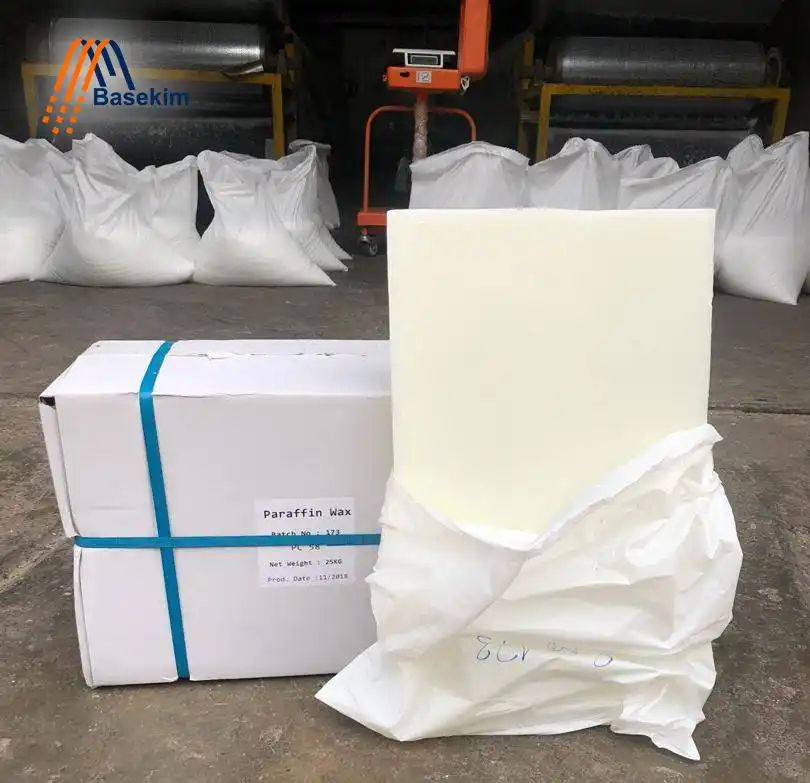
Paraffin wax is a versatile, colorless, and odorless solid wax derived from petroleum, coal, or oil shale, consisting primarily of a mixture of saturated hydrocarbon molecules containing between twenty and forty carbon atoms. Highly valued for its excellent water resistance, electrical insulation, and low melting point, industries use it extensively in everything from candle manufacturing and food packaging to rubber processing and cosmetics. Whether you require fully refined grades for high-clarity applications or semi-refined versions for cost-effective industrial use, paraffin wax remains a fundamental raw material in the modern global supply chain.
Understanding Paraffin Wax Structure and Composition
At its core, paraffin wax is a derivative of “slack wax,” a mixture of oil and wax produced during the refining of lubricating oil. To understand why this material behaves the way it does in a factory or a lab, we must look at its chemical blueprint.
The Paraffin Wax Chemical Formula
Paraffin wax belongs to the alkane family. The general chemical formula for this wax is CₙH₂ₙ₊₂, where “n” typically ranges from 20 to 40. Because these are saturated hydrocarbons, the atoms are linked by single bonds, creating a stable, non-reactive structure.
Molecular Composition
The composition of paraffin wax isn’t a single substance but a blend of straight-chain (normal) alkanes and branched-chain (isoalkanes). The straight-chain molecules provide the wax with its characteristic crystalline structure and hardness, while the branched chains influence the flexibility and melting point.
When you heat the wax, these molecular chains vibrate and slide past one another, leading to a predictable transition from a solid to a low-viscosity liquid. This stability makes it an ideal candidate for industrial molding and coating.
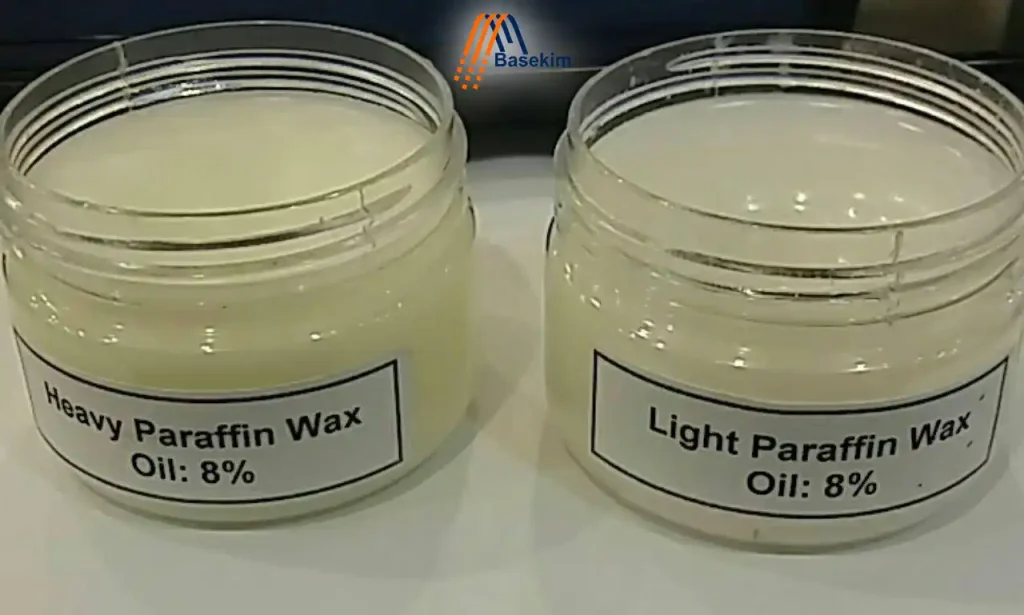
Fully Refined vs. Semi Refined Paraffin Wax
The difference between a high-end cosmetic product and a standard industrial lubricant often comes down to the refinement level of the wax.
Fully Refined Paraffin Wax
Manufacturers produce fully refined paraffin wax by removing almost all oil content from the slack wax.
Oil Content: Usually less than 0.5%.
Appearance: Pure white, translucent, and odorless.
Characteristics: It possesses a high melting point and a hard texture. It leaves no residue and meets food-grade standards.
Best For: High-quality candles, food packaging, cosmetics, and pharmaceuticals.
Semi Refined Paraffin Wax
Semi-refined paraffin wax undergoes less intensive processing, leaving a slightly higher percentage of oil within the structure.
Oil Content: Generally between 0.5% and 1.5% (though some industrial grades go up to 3%).
Appearance: Slightly more opaque than fully refined wax.
Characteristics: It is more cost-effective but may have a slight odor or a less rigid structure due to the higher oil content.
Best For: Industrial applications where pure aesthetics or food safety are not the primary concerns.
| Feature | Fully Refined | Semi Refined |
| Oil Content | < 0.5% | 0.5% – 1.5% |
| Color | Snow White | White to Off-White |
| Common Use | Cosmetics/Food | Matches/Rubber |
| Odor | None | Faint |
Diverse Paraffin Wax Uses Across Industries
Paraffin wax is far more than just a candle ingredient. Its unique physical properties specifically its ability to act as a moisture barrier and its phase-change heat storage make it indispensable.
1. Candle Industry
This is the most recognizable application. Paraffin wax remains the gold standard for candle makers because it holds fragrance oils exceptionally well and provides a consistent, clean burn. High-melting-point paraffin is used for pillar candles to ensure they maintain their shape, while lower-melting-point versions are perfect for container candles.
2. Cosmetics and Medicine
In the beauty industry, paraffin wax serves as a powerful emollient. During paraffin treatments, the wax traps heat against the skin, opening pores and increasing circulation. It also acts as a barrier to lock in moisture, making it a staple in hand and foot therapy. In medicine, highly purified paraffin oil (liquid paraffin) acts as a lubricant or a base for ointments.
3. Industrial Coatings and Moisture Barriers
Because paraffin is hydrophobic (it repels water), refineries produce bulk this product for the paper and corrugated cardboard industries. Coating a box in a thin layer of wax prevents moisture from weakening the structure essential for shipping frozen foods or fresh produce.
4. Rubber and PVC Processing
In the manufacturing of tires and rubber belts, paraffin wax acts as an “anti-ozonant.” The wax migrates to the surface of the rubber, forming a protective layer that prevents cracking caused by ozone exposure. In PVC production, it acts as an external lubricant, ensuring the plastic flows smoothly through extrusion machinery without sticking.
5. Specialized Energy Storage
Modern engineering uses paraffin wax as a Phase Change Material (PCM). It can absorb and release large amounts of latent heat as it melts and solidifies. This makes it useful for regulating temperatures in electronics or solar energy systems.
Sourcing and Supply: Bulk Paraffin Wax
For large-scale industrial operations, procurement strategy is just as important as chemical specifications. Buying in bulk requires a partner who understands the nuances of melting points and penetration grades.
Selecting a Paraffin Wax Supplier
When choosing a paraffin wax supplier, technical transparency is non-negotiable. A professional supplier should provide a full Certificate of Analysis (COA) for every batch, detailing:
Melting Point: Usually measured via ASTM D87.
Oil Content: Crucial for determining the refinement grade.
Color (Saybolt): Indicates the purity level.
Needle Penetration: Measures the hardness of the wax.
Scurea stands out in the global market as a leading supplier, providing high-purity paraffin wax grades that meet rigorous international standards (ASTM/ISO). Their focus on technical documentation and consistent batch quality ensures that industrial buyers receive material that integrates seamlessly into their production lines.
Logistics of Bulk Paraffin Wax
Bulk wax is typically shipped in three forms:
Slabs: Hard blocks packed in cartons or bags (easiest for storage).
Granules/Pellets: Small beads that melt quickly and are easy to measure.
Liquid Bulk: Transported in heated tankers for immediate use in large factories, eliminating the need for on-site melting.
Maintenance and Safety: Handling Paraffin Wax
While paraffin wax is generally non-toxic, handling it at scale requires specific safety protocols.
Vapor Management: When melting wax at high temperatures, ensure proper ventilation. Overheating wax can produce fumes that irritate the respiratory system.
Flash Point: Always monitor the temperature. Paraffin has a high flash point (usually above 200°C), but it is still flammable. Never use an open flame to melt wax; use a water bath or electric heaters.
Storage: Store bulk wax in a cool, dry place away from direct sunlight. High temperatures in a warehouse can cause blocks to fuse together or lead to “oil sweating.”
Final Thoughts for Industrial Buyers
Success in manufacturing depends on the consistency of your raw materials. Paraffin wax offers a unique combination of stability, water resistance, and thermal properties that few synthetic alternatives can match. By understanding the distinction between fully and semi-refined grades and partnering with a technically proficient supplier, you ensure your end products whether they are high-clarity candles or heavy-duty rubber tires meet the highest market standards.
When you prioritize precision in your wax specifications, you reduce production downtime and improve the final user experience. Paraffin wax remains a cornerstone of industrial chemistry for a reason: it works.