
As industries continue to demand higher processing efficiency, improved product quality, and cost effective manufacturing, specialty waxes have become essential additives across many production sectors. Among these materials, Low Density Polyethylene Wax (LDPE Wax) plays a vital role in plastics, coatings, printing inks, adhesives, rubber compounds, and masterbatch manufacturing.
A reliable LDPE Wax Supplier provides products that help manufacturers improve lubrication, dispersion, surface appearance, and processing performance. Because LDPE wax possesses a unique molecular structure and lower density compared to other polyethylene waxes, it offers excellent compatibility and flexibility in numerous industrial formulations.
Furthermore, LDPE wax supports smoother processing while reducing energy consumption and equipment wear. As a result, manufacturers can achieve consistent product quality and higher production efficiency. In addition, its balanced thermal stability and lubrication characteristics make it suitable for demanding industrial environments.
Today, Industrial LDPE Wax serves as a key processing aid for producers seeking enhanced operational performance without compromising product specifications. Furthermore, understanding its properties, applications, and selection criteria can help buyers make informed purchasing decisions and optimize manufacturing outcomes.
What Is LDPE Wax?
Low Density Polyethylene Wax (LDPE Wax) is a low molecular weight polyethylene material produced from low density polyethylene polymers through controlled polymerization or degradation processes. It functions primarily as a lubricant, dispersing agent, processing aid, and surface modifier in industrial formulations.
Manufacturing Process
Manufacturers typically produce LDPE wax through:
Direct polymerization of ethylene under controlled conditions
Thermal degradation of LDPE resin
Catalytic cracking processes
Specialized refining and purification techniques
Consequently, the resulting wax exhibits a lower density and more branched molecular structure than HDPE wax.
Chemical Characteristics
LDPE wax consists primarily of:
Long chain hydrocarbon molecules
Branched polyethylene structures
Non polar chemical composition
High purity polymer chains
Moreover, its branched architecture contributes to improved flexibility and compatibility in many formulations.
Physical Properties
Typical physical characteristics include:
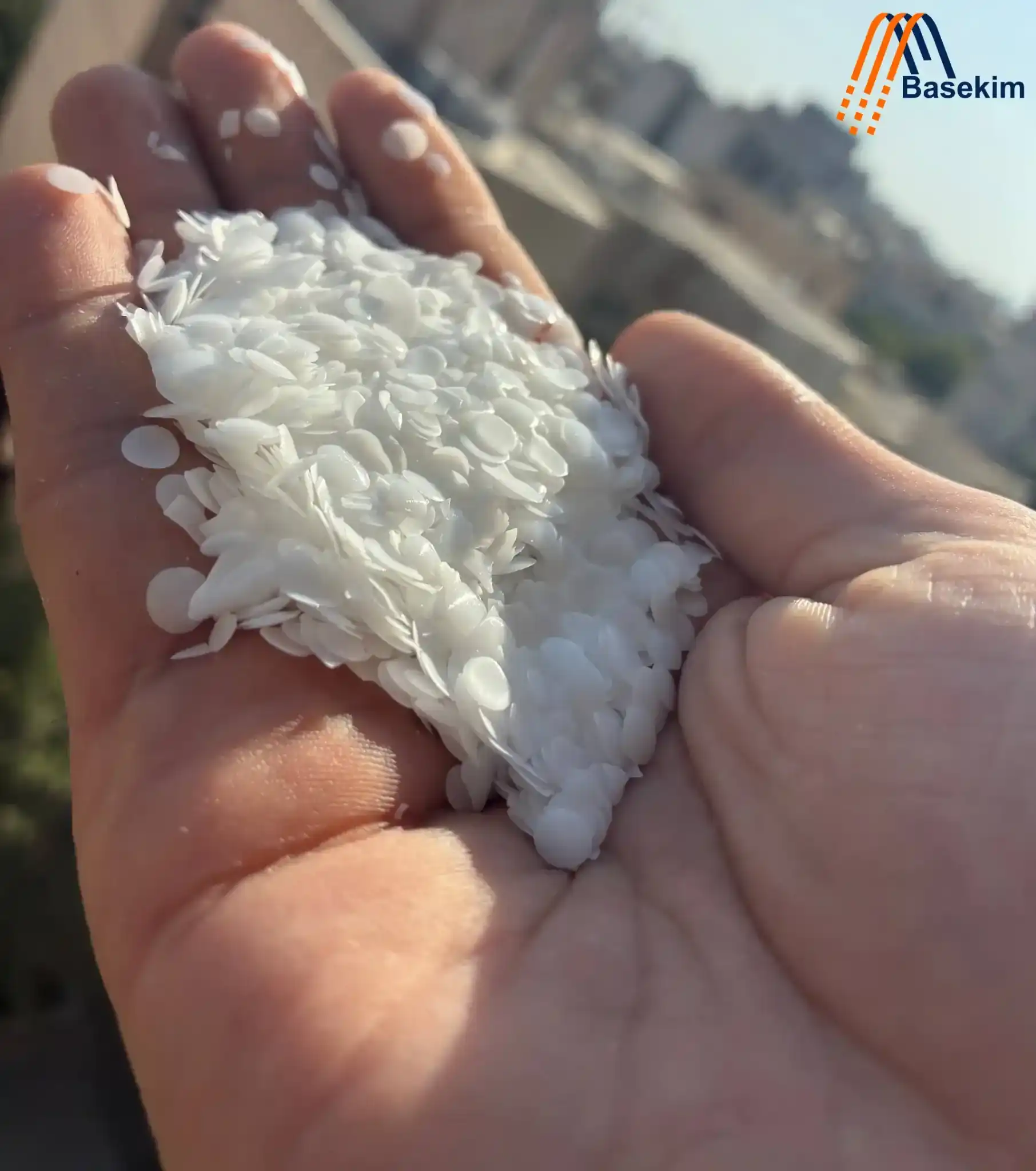
White powder, flakes, granules, or pellets
Low density compared to HDPE wax
Moderate hardness
Excellent lubricity
Good thermal stability
Low melt viscosity
Therefore, LDPE wax performs effectively in both internal and external lubrication applications.
Key Properties of Low Density Polyethylene Wax
The performance of Low Density Polyethylene Wax depends on several important characteristics that make it suitable for industrial processing.
Low Density Structure
The branched molecular structure creates a lower density profile than HDPE wax. As a result, LDPE wax offers improved flexibility and compatibility with many polymer systems.
Excellent Lubrication
One of the most valued LDPE Wax Properties is its outstanding lubricating capability.
It helps:
Reduce friction
Improve material flow
Lower processing torque
Minimize equipment wear
Consequently, manufacturers experience smoother production operations.
Thermal Stability
LDPE wax maintains stable performance at elevated processing temperatures. Furthermore, this stability helps preserve formulation integrity during extrusion, compounding, and coating processes.
Low Viscosity
Its relatively low melt viscosity promotes efficient flow characteristics.
Therefore, processors benefit from:
Faster mixing
Better distribution
Reduced energy consumption
Improved process control
Good Compatibility
LDPE wax demonstrates excellent compatibility with:
Polyolefins
PVC compounds
Pigments
Fillers
Various additives
In addition, this compatibility contributes to more uniform formulations.
Dispersion Performance
Proper pigment and filler dispersion directly affects final product quality.
LDPE wax helps:
Wet pigment particles
Improve color distribution
Reduce agglomeration
Enhance formulation consistency
As a result, manufacturers achieve better product appearance and performance.
Chemical Resistance
LDPE wax resists many chemicals, moisture, and environmental influences. Therefore, it remains stable in a wide range of industrial applications.
Processing Efficiency
Because LDPE wax combines lubrication, dispersion, and flow enhancement properties, it significantly improves overall manufacturing efficiency.
Benefits of LDPE Wax in Industrial Processing
Industrial manufacturers use LDPE wax to improve production performance while maintaining product quality.
Increased Productivity
LDPE wax reduces friction during processing.
Consequently, equipment operates more efficiently and production output often increases.
Improved Surface Quality
Manufacturers frequently use LDPE wax to enhance surface characteristics.
Benefits include:
Better gloss
Improved smoothness
Reduced surface defects
Enhanced appearance
Faster Processing Speed
The lubricating effect helps materials move through processing equipment more efficiently.
As a result, manufacturers can often increase line speeds without sacrificing quality.
Better Cost Efficiency
LDPE wax contributes to cost savings through:
Reduced energy consumption
Lower equipment wear
Improved process stability
Less material waste
Therefore, manufacturers can improve overall production economics.
Enhanced Product Consistency
Consistency remains a critical requirement for industrial buyers.
Because LDPE wax improves dispersion and flow behavior, it helps maintain uniform quality from batch to batch.
LDPE Wax Applications
The versatility of LDPE wax makes it valuable across numerous industries.
LDPE Wax for PVC Processing
PVC manufacturers commonly use LDPE Wax for PVC formulations as both an internal and external lubricant.
Why It Is Used
PVC processing generates significant friction and heat. LDPE wax helps control these effects during extrusion and compounding.
Benefits
Improved melt flow
Reduced processing friction
Better mold release
Enhanced surface finish
Performance Improvements
Furthermore, LDPE wax helps maintain stable processing conditions, leading to improved product consistency and reduced production interruptions.
LDPE Wax for Color Masterbatch
Color masterbatch producers rely on LDPE Wax for Masterbatch applications to improve pigment distribution.
Why It Is Used
Pigments require effective wetting and dispersion to achieve consistent coloration.
Benefits
Improved pigment dispersion
Better color strength
Reduced agglomeration
Enhanced processing efficiency
Performance Improvements
As a result, manufacturers obtain more uniform color distribution and higher quality finished products.
LDPE Wax for Filler Masterbatch
Filler masterbatch formulations often contain high loading levels of calcium carbonate or other minerals.
Why It Is Used
LDPE wax improves compatibility between fillers and polymer matrices.
Benefits
Easier processing
Better filler dispersion
Reduced energy consumption
Improved flow behavior
Performance Improvements
Consequently, manufacturers achieve higher filler loading while maintaining production efficiency.
LDPE Wax for Hot Melt Adhesives
LDPE Wax for Hot Melt Adhesives serves as a critical formulation component.
Why It Is Used
Hot melt systems require controlled viscosity and stable processing characteristics.
Benefits
Viscosity adjustment
Improved flow properties
Better application performance
Enhanced processing stability
Performance Improvements
Furthermore, LDPE wax contributes to consistent adhesive application and reliable manufacturing performance.
LDPE Wax for Coatings
Many formulators use LDPE Wax for Coatings to improve surface performance.
Why It Is Used
Coatings require additives that enhance durability and appearance.
Benefits
Improved scratch resistance
Better slip properties
Enhanced surface smoothness
Increased durability
Performance Improvements
As a result, coated surfaces demonstrate improved performance under demanding conditions.
LDPE Wax for Printing Inks
Manufacturers frequently utilize LDPE Wax for Printing Inks to optimize print quality.
Why It Is Used
Printing inks require surface modifiers that improve handling and durability.
Benefits
Enhanced rub resistance
Better scuff resistance
Improved slip characteristics
Consistent print appearance
Performance Improvements
Moreover, LDPE wax helps maintain print quality throughout production and end use applications.
LDPE Wax for Rubber Processing
Rubber compound manufacturers also incorporate LDPE wax into various formulations.
Why It Is Used
Rubber processing requires effective lubrication and flow enhancement.
Benefits
Improved mixing efficiency
Better material flow
Reduced equipment wear
Enhanced process stability
Performance Improvements
Consequently, manufacturers experience smoother processing and improved product consistency.
LDPE Wax vs HDPE Wax
Although both materials belong to the polyethylene wax family, important differences affect application selection.
| Property | LDPE Wax | HDPE Wax |
|---|---|---|
| Density | Lower | Higher |
| Molecular Structure | More branched | More linear |
| Flexibility | Higher | Lower |
| Hardness | Moderate | Higher |
| Melting Point | Lower to medium | Higher |
| Lubrication | Excellent balanced lubrication | Strong external lubrication |
| Compatibility | Better with many formulations | More limited in some systems |
| Dispersion Performance | Excellent | Good |
| Surface Modification | Good | Excellent hardness contribution |
| Typical Applications | PVC, masterbatch, inks, coatings, adhesives | PVC, coatings, plastics, processing aids |
| Processing Behavior | Smoother flow characteristics | Higher hardness and durability contribution |
Therefore, the choice depends on specific formulation requirements and performance objectives.
Typical Technical Specifications of LDPE Wax
The following values represent common industry ranges. Actual specifications vary among manufacturers and grades.
| Property | Typical Range |
|---|---|
| Appearance | White powder, flakes, granules |
| Density (g/cm³) | 0.91 – 0.94 |
| Melting Point (°C) | 95 – 115 |
| Viscosity at 140°C (cps) | 100 – 1,500 |
| Acid Value (mg KOH/g) | 0 – 5 |
| Penetration (dmm) | 2 – 15 |
| Molecular Weight | 1,000 – 5,000 |
| Volatile Content (%) | ≤ 1.0 |
| Ash Content (%) | ≤ 0.1 |
| Thermal Stability | Excellent |
Manufacturers should always verify specifications based on application requirements and supplier documentation.
How to Select the Right LDPE Wax Supplier
Choosing the right LDPE Wax Supplier directly impacts manufacturing performance and supply reliability.
Product Consistency
Consistency remains one of the most important purchasing criteria.
A qualified supplier should provide:
Stable quality
Reliable specifications
Consistent batch performance
Therefore, buyers should review quality records and testing procedures.
Quality Control
Strong quality control systems help ensure dependable product performance.
Important considerations include:
Laboratory testing
Production monitoring
Traceability systems
Quality certifications
Technical Support
Technical expertise provides additional value beyond product supply.
Look for suppliers that offer:
Application guidance
Product selection support
Troubleshooting assistance
Technical documentation
Global Supply Capability
International manufacturers often require dependable logistics and inventory management.
Consequently, suppliers should demonstrate:
Stable production capacity
Export experience
Reliable delivery schedules
Supply chain resilience
Documentation
Professional suppliers provide comprehensive documentation, including:
Technical data sheets
Safety data sheets
Certificates of analysis
Regulatory information
For example, companies such as Scurea operate in the industrial chemical raw materials sector and emphasize documentation, quality consistency, and technical support as important elements of supplier evaluation.