
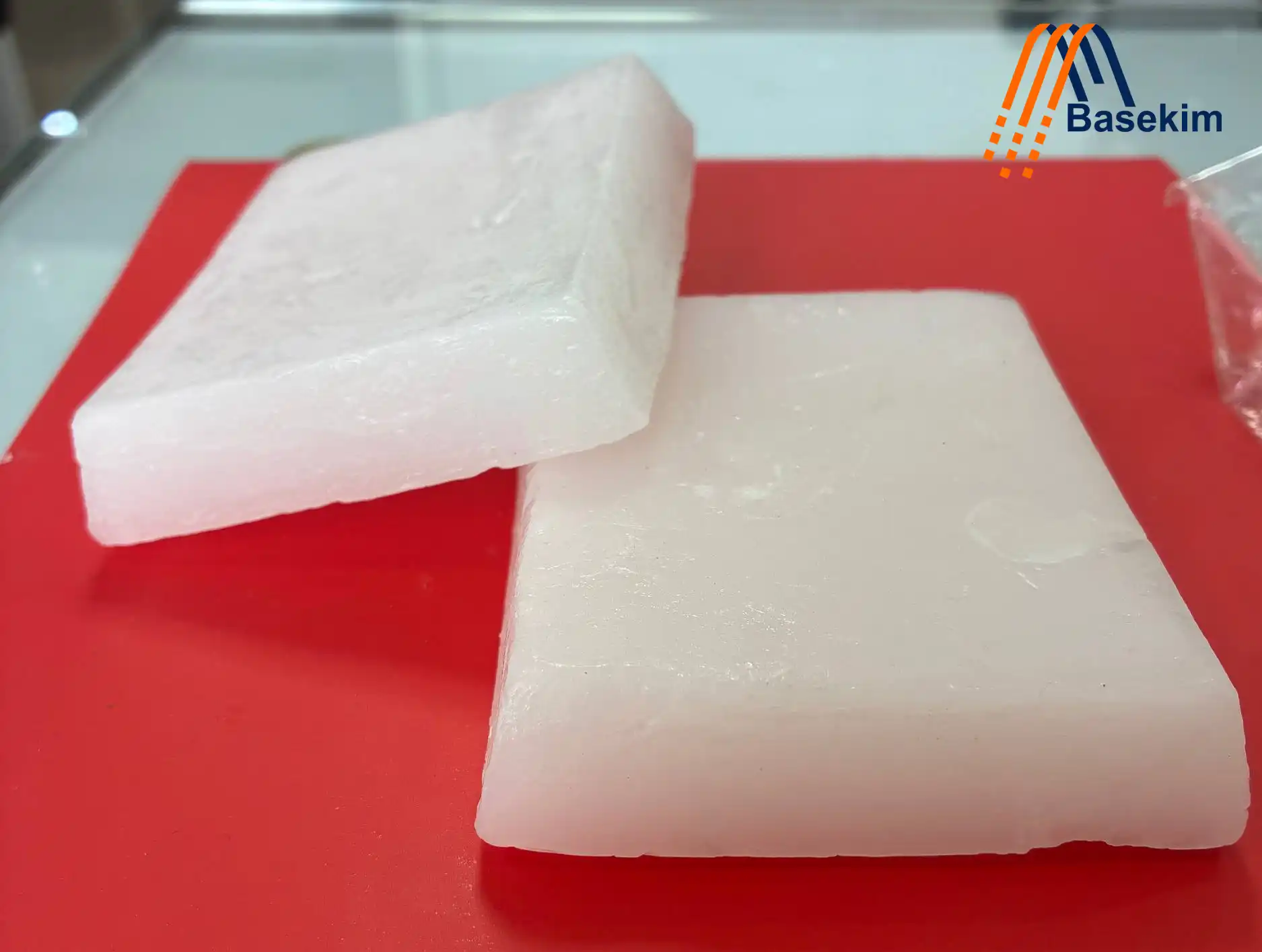
Paraffin Wax 3-5% is a semi refined petroleum wax with a controlled oil content, clean appearance, stable melting behavior, and reliable performance in industrial production. Buyers choose Semi Refined Paraffin Wax 3-5% when they need a cost-effective wax grade that offers good flexibility, workable hardness, smooth processing, and dependable quality for candles, packaging, rubber, polishes, coatings, textiles, and many other applications.
This grade sits between fully refined paraffin wax and higher-oil industrial waxes. It gives manufacturers a practical balance: cleaner and more consistent than slack wax, yet more economical than fully refined wax. Because of its 3–5% oil range, it remains versatile, easy to blend, and suitable for many production lines that need controlled softness, good lubrication, and stable physical properties.
What Is Semi Refined Paraffin Wax 3-5%?
Semi Refined Paraffin Wax 3-5% is a hydrocarbon wax obtained during petroleum refining. Producers remove a large part of the oil, color bodies, and impurities from slack wax, then adjust the final wax to meet a controlled oil content of about 3% to 5%.
This wax usually comes in solid slabs, granules, pastilles, or blocks. It has a white to slightly off-white color, a solid structure at room temperature, and a melting point range that depends on the selected grade. Manufacturers often choose it when they want stable performance without paying the higher cost of fully refined paraffin wax.
The controlled oil content gives this wax useful properties. It improves flexibility, supports better blending, and helps the wax perform well in products that do not require the ultra-low oil level of fully refined grades.
Key Benefits of Paraffin Wax 3-5%
Paraffin Wax 3-5% gives industrial buyers a strong combination of performance, price, and availability. It supports efficient production and works well across many sectors.
Its main benefits include:
- Balanced oil content
The 3–5% oil level gives the wax enough flexibility while keeping it clean and stable for industrial use. - Good processing behavior
Manufacturers can melt, blend, pour, mold, and coat this wax with ease. - Cost-effective performance
This grade offers a more affordable option than fully refined wax while still delivering dependable quality. - Wide application range
It serves candle makers, packaging producers, rubber manufacturers, polish formulators, coating companies, and textile processors. - Consistent supply options
Export-ready suppliers can provide different melting points, packaging types, and shipment quantities.
Why Buyers Choose Semi Refined Paraffin Wax 3-5%
Industrial buyers often compare wax grades based on oil content, melting point, color, odor, hardness, penetration, and final product requirements. Semi Refined Paraffin Wax 3-5% meets the needs of many manufacturers because it offers flexibility without losing structure.
Candle producers use it to improve burning behavior and reduce brittleness. Rubber manufacturers use it as a protective and processing wax. Packaging companies use it to improve moisture resistance. Polish producers use it for shine, texture, and surface protection. Coating manufacturers use it to improve water repellency and smoothness.
This wax also blends well with microcrystalline wax, fully refined paraffin, polyethylene wax, stearic acid, EVA, resins, oils, and other additives. That compatibility gives formulators more control over texture, melting point, hardness, gloss, and final performance.
Common Applications of Paraffin wax 3-5%
Candle Manufacturing
Candle makers use Paraffin Wax 3-5% in many standard candle types. It works well for pillar candles, household candles, religious candles, decorative candles, and blended wax candles.
The oil content helps reduce cracking and improves mold release. It also supports smooth pouring and good shape retention. Many producers blend it with fully refined paraffin wax, stearic acid, or other candle additives to adjust hardness, opacity, fragrance retention, and burn quality.
For budget-friendly candle production, this wax gives excellent value. It allows factories to maintain good appearance and performance while controlling raw material costs.
Packaging and Paper Coating
Semi refined paraffin wax helps packaging producers create moisture-resistant surfaces. It can coat paper, cardboard, cartons, and wrapping materials. The wax layer reduces water absorption and gives the surface a smoother feel.
Food-contact packaging requires strict compliance with local regulations, so buyers must confirm the correct grade and documentation before use. For general industrial packaging, this wax offers strong moisture barrier properties and easy application.
It also works in laminated papers, waxed cartons, protective sheets, and industrial wrapping materials.
Rubber and Tire Industry
Rubber manufacturers use paraffin wax as a processing aid and protective agent. In rubber compounds, wax can migrate to the surface and create a thin protective layer. This layer helps reduce the effect of ozone and weather exposure.
Semi Refined Paraffin Wax 3-5% supports rubber processing by improving lubrication, reducing sticking, and helping compounds move more smoothly through equipment. Tire producers, hose manufacturers, footwear factories, and technical rubber goods producers can use this wax in selected formulations.
Polishes and Surface Care
Paraffin wax improves shine, texture, and protection in polish products. Manufacturers use it in shoe polish, floor polish, furniture polish, car care products, and protective paste formulations.
The wax helps create a smooth film on surfaces. It adds body to the polish, improves spreadability, and supports a clean finish. Producers can blend it with solvents, oils, pigments, resins, and other waxes to reach the right consistency and gloss level.
Coatings and Waterproofing
Coating manufacturers use paraffin wax to increase water resistance, reduce surface friction, and improve barrier properties. This wax can support protective coatings for wood, paper, textiles, boards, and industrial materials.
It also helps in waterproofing formulations where manufacturers need a cost-effective hydrophobic ingredient. Its low water solubility makes it useful in many moisture-control applications.
Textile and Leather Processing
Textile processors use wax to improve lubrication, reduce friction, and support smoother yarn or fabric handling. Leather finishers can also use wax in selected formulations to improve surface feel and protection.
Semi refined wax works well when the process needs a practical industrial wax with good melting behavior and stable supply.
Construction and Board Industry
Construction material producers can use paraffin wax in boards, panels, insulation materials, and moisture-resistant products. Wax helps reduce water absorption and improve dimensional stability in certain board applications.
It can also support emulsion systems, protective coatings, and additive blends used in construction-related manufacturing.
Important Technical Properties
Buyers should check the technical data sheet before placing an order. Different production sources and melting ranges can affect the final performance.
Common technical parameters include:
- Oil content: 3–5%
- Color: white to light off-white
- Form: slabs, blocks, granules, or pastilles
- Melting point: commonly available in several ranges
- Odor: mild petroleum wax odor
- Penetration: depends on grade and oil content
- Application: industrial and commercial manufacturing
The best grade depends on the final product. Candle makers may prioritize melting point, color, and hardness. Rubber manufacturers may focus on oil content, migration behavior, and compatibility. Packaging producers may check viscosity, coating behavior, and moisture resistance.
Paraffin Wax 3-5% vs Fully Refined Paraffin Wax
Fully refined paraffin wax usually has a much lower oil content, cleaner color, lower odor, and higher purity. It suits applications that require very strict appearance, low oil, and refined performance.
Paraffin Wax 3-5%, however, gives manufacturers a more economical option. It still offers good color and stable quality, but its oil content makes it more flexible and easier to use in many industrial formulas.
Choose fully refined paraffin wax when your product needs very low oil, high purity, and premium appearance. Choose semi refined paraffin wax 3-5% when your product needs practical performance, good processing, and better cost control.
Paraffin Wax 3-5% vs Slack Wax
Slack wax contains much more oil and has a softer, less refined structure. It often serves as a raw material for further refining or for heavy industrial uses.
Semi refined paraffin wax 3-5% has lower oil content, better color, more stable melting behavior, and wider usability. It works in more finished products and gives manufacturers better control.
Buyers who need cleaner wax, more stable production, and better final product quality usually prefer the 3–5% semi refined grade over slack wax.
How to Choose the Right Grade
To choose the right Semi Refined Paraffin Wax 3-5%, buyers should define the final application first. A candle producer may need a different melting point from a rubber compounder or coating manufacturer.
Ask these questions before ordering:
- What melting point does the production line need?
- Should the wax come in slabs, granules, or pastilles?
- Does the final product require a very white color?
- Will the wax blend with oils, polymers, resins, or other waxes?
- Does the process need fast melting or slow cooling?
- What packaging size fits the warehouse and production system?
- Does the buyer need export documents, certificate of analysis, or MSDS?
A reliable supplier can help match the wax grade to the application. For commercial orders, buyers should request a sample, technical data sheet, safety data sheet, and recent certificate of analysis.
Packaging Options
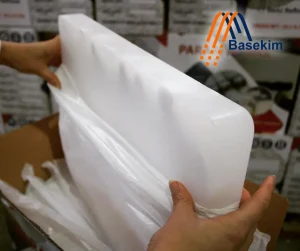
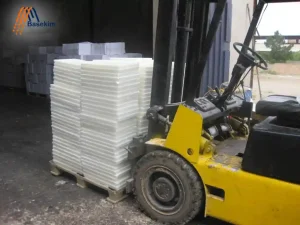
Suppliers usually provide paraffin wax in several packaging types. Common options include bags, cartons, jumbo bags, palletized blocks, and shrink-wrapped slabs. The best choice depends on handling equipment, storage space, order quantity, and transport method.
Granules and pastilles offer easier dosing and faster melting. Slabs and blocks often cost less and work well for factories with melting tanks or manual handling systems. Export buyers should also check pallet dimensions, container loading capacity, net weight, and humidity protection.
Good packaging protects wax from dirt, moisture, heat, and physical damage during storage and transport.
Storage and Handling
Store Paraffin Wax 3-5% in a cool, dry, and clean area. Keep it away from direct sunlight, open flames, and high heat sources. Although paraffin wax stays stable under normal storage conditions, high temperatures can deform blocks or cause sticking.
Workers should use clean tools and avoid contamination with dust, water, chemicals, or incompatible materials. During melting, factories should control temperature carefully and follow standard safety rules for heated wax systems.
Safe handling improves product consistency and protects production quality.
Commercial Advantages for Importers and Manufacturers
Importers and manufacturers value semi refined paraffin wax because it supports large-scale production at competitive cost. It has strong demand across many industries, and buyers can order it in flexible quantities.
This wax also moves well in international trade. Suppliers can prepare export packaging, shipping documents, certificates, and inspection support when required. For buyers who need regular shipments, stable sourcing reduces production delays and pricing risks.
Scurea supplies semi refined paraffin wax 3-5% for industrial buyers who need dependable quality, commercial support, and export-ready service.
Why Quality Control Matters
Quality control protects the final product. Even small changes in oil content, melting point, color, or penetration can affect production results. Candle makers may see changes in surface finish or burn behavior. Rubber manufacturers may see differences in processing or protection. Coating producers may notice changes in viscosity, film quality, or drying behavior.
A professional supplier should provide clear specifications and consistent batches. Buyers should compare samples, test them in their own production line, and approve the grade before placing large orders.
Buying Semi Refined Paraffin Wax 3-5%
When buying Semi Refined Paraffin Wax 3-5%, focus on specification first, not only price. A lower price can become expensive if the wax causes production waste, color problems, inconsistent melting, or poor final performance.
A strong purchase inquiry should include:
- Required oil content
- Preferred melting point
- Application
- Quantity
- Packaging type
- Destination port or delivery location
- Required documents
- Target delivery schedule
Clear information helps the supplier quote accurately and recommend the right wax grade.