Slack Wax 5% Oil Content
Home » Slack Wax 5% Oil Content
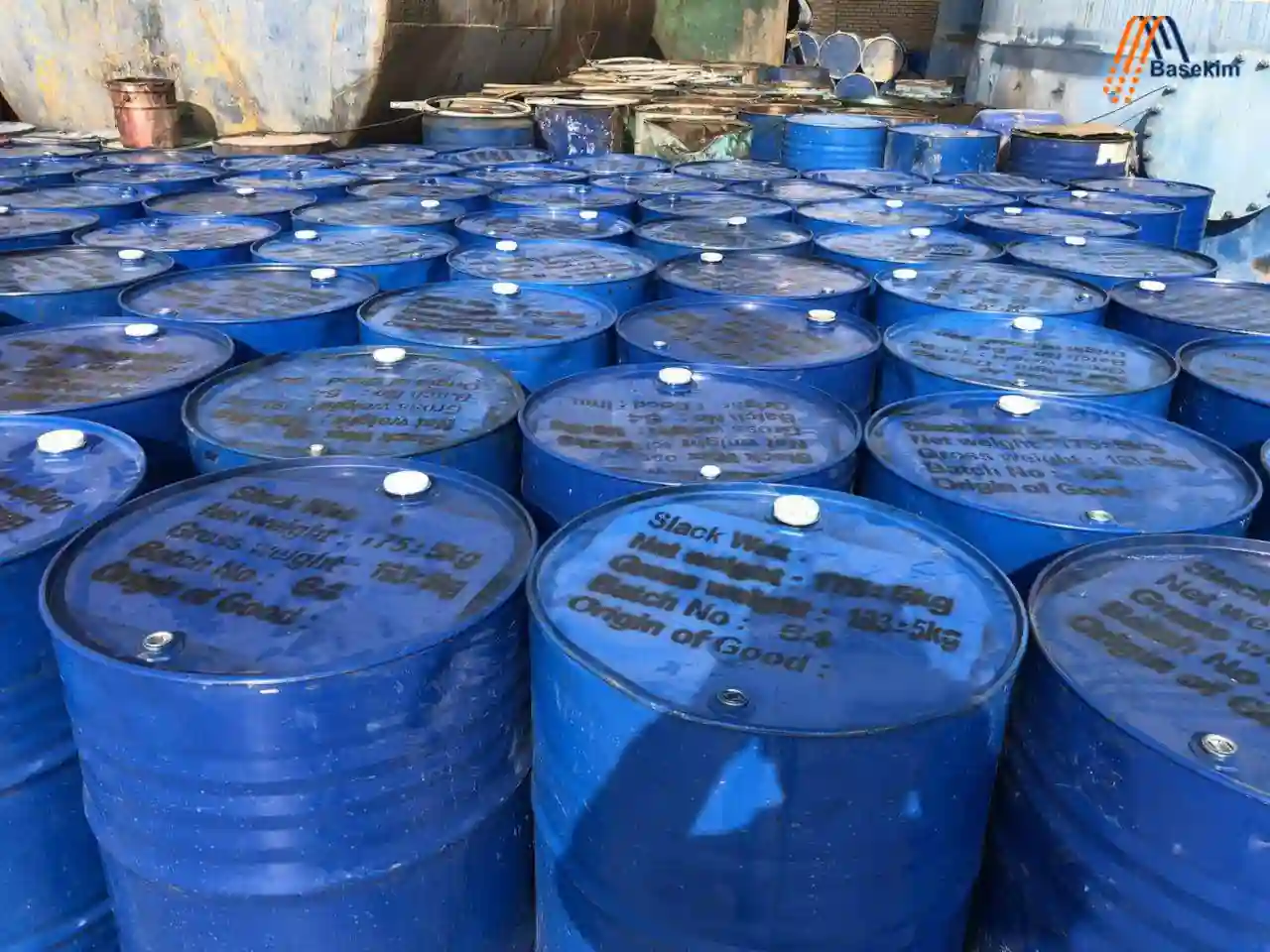
Slack Wax 5% Oil Content is a versatile petroleum wax widely used in industrial manufacturing and wax processing. It contains approximately 5% oil and offers an excellent balance between purity, flexibility, and processing efficiency. As a result, manufacturers across several industries rely on this material for consistent performance and reliable production outcomes.
This low oil content slack wax originates from the petroleum refining process and serves as an important intermediate material in wax production. Moreover, it plays a significant role in paraffin wax manufacturing, candle production, waterproofing compounds, rubber processing, and specialty industrial formulations.
Because of its controlled oil content and stable physical properties, Slack Wax 5% Oil Content provides manufacturers with a dependable raw material for producing high-quality finished products. Furthermore, its cost-effective nature makes it an attractive choice for industrial operations that require large volumes of petroleum wax.
What Is Slack Wax 5% Oil Content?
Slack Wax 5% Oil Content is a semi-refined petroleum wax produced during the solvent dewaxing of lubricating oil stocks. It contains approximately 5% residual oil, which gives the wax unique processing characteristics while maintaining a relatively high level of purity.
Definition
Slack wax is a hydrocarbon-based wax mixture composed primarily of normal paraffins, isoparaffins, and naphthenic hydrocarbons. Specifically, the 5% grade contains a limited amount of residual oil, making it suitable for further refining or direct industrial applications.
Production Source
Manufacturers obtain slack wax during the refining of crude oil. During the lubricating oil production process, refiners remove wax crystals from oil fractions through controlled cooling and solvent separation. Consequently, the recovered wax forms what the industry calls slack wax.
Characteristics
Slack Wax 5% offers several desirable characteristics:
- Moderate hardness
- Excellent blend compatibility
- Stable melting behavior
- Good water resistance
- Strong binding properties
- Efficient processing performance
Understanding Oil Content
Oil content refers to the percentage of residual lubricating oil trapped within the wax structure. In this grade, the oil content remains around 5%.
A lower oil percentage generally provides:
- Better purity
- Improved color stability
- Enhanced refining efficiency
- Greater consistency in industrial processing
Therefore, low oil content slack wax often serves as a preferred feedstock for paraffin wax production and specialty wax formulations.
How Slack Wax 5% Is Produced
The production of Slack Wax 5% involves several carefully controlled refining stages. Each stage contributes to product quality, consistency, and performance.
Dewaxing Process
First, refiners cool lubricating oil fractions under controlled conditions. As temperatures decrease, wax crystals begin to form within the oil.
Next, operators introduce solvents that help separate wax crystals from the liquid oil phase. Filtration systems then remove the solid wax fraction from the mixture.
This process produces crude slack wax containing varying amounts of residual oil.
Refining Process
After dewaxing, producers further process the wax to achieve specific oil content levels.
Refining steps may include:
- Additional filtration
- Solvent treatment
- Controlled oil reduction
- Quality stabilization
As a result, the final product reaches the desired 5% oil content specification.
Quality Control
Manufacturers perform extensive testing throughout production. These tests help ensure consistency between batches.
Common quality checks include:
- Oil content measurement
- Melting point verification
- Color evaluation
- Penetration testing
- Flash point analysis
Consequently, customers receive a product that meets industrial performance standards.
Industrial Manufacturing Overview
Modern petroleum refineries use advanced equipment and automated control systems. These technologies improve production efficiency and maintain strict quality requirements.
Furthermore, standardized manufacturing procedures help ensure reliable supply for domestic and export markets.
Technical Specifications of Slack Wax 5% Oil Content
The exact properties may vary slightly depending on production methods and feedstock characteristics. However, the following table represents a typical Slack Wax 5% specification.
Slack Wax 5% Technical Data Sheet
| Property | Typical Value |
|---|---|
| Oil Content | Max 5.0% |
| Melting Point | 52°C – 60°C |
| Congealing Point | 50°C – 58°C |
| Color | Light Yellow to Brown |
| Penetration @ 25°C | 18 – 30 dmm |
| Flash Point | Above 220°C |
| Appearance | Solid, Semi-Crystalline Wax |
| Odor | Mild Petroleum Odor |
| Water Content | Negligible |
| Solubility | Insoluble in Water |
Values are typical industrial ranges and may vary according to production batches.
Key Properties of Slack Wax 5% Oil Content
The combination of low oil content and stable hydrocarbon composition gives this petroleum wax several important advantages.
Physical Characteristics Slack Wax 5%
Slack Wax 5% demonstrates:
- Uniform texture
- Semi-crystalline structure
- Good hardness
- Controlled flexibility
- Consistent melting behavior
Additionally, it offers excellent compatibility with many industrial additives and wax blends.
Chemical Characteristics Slack Wax 5%
This material primarily contains saturated hydrocarbons derived from petroleum refining.
Key chemical features include:
- High hydrocarbon content
- Low moisture level
- Good oxidation resistance
- Stable chemical structure
Moreover, these properties contribute to longer storage life and predictable processing behavior.
Performance Advantages Slack Wax 5%
Manufacturers prefer Heavy Grade Slack Wax 5% because it provides:
- Consistent production quality
- Reliable processing performance
- Reduced refining losses
- Improved blending efficiency
Consequently, industrial users can maintain stable manufacturing operations while controlling production costs.
Applications of Slack Wax 5% Oil Content
The broad functionality of Slack Wax 5% makes it suitable for numerous industrial sectors. Its balance between purity and processability creates value across many applications.
Paraffin Wax Production
One of the most important Slack Wax 5% applications involves paraffin wax manufacturing.
Refiners use Slack Wax 5% for paraffin wax production because:
- It contains relatively low residual oil.
- It refines efficiently.
- It delivers higher wax yields.
- It improves finished product quality.
Furthermore, manufacturers can convert this material into fully refined paraffin wax through additional processing.
Candle Manufacturing
Candle producers often use slack wax blends to improve production economics and performance.
Benefits include:
- Stable burning properties
- Good mold release
- Improved structural integrity
- Consistent wax behavior
Additionally, it works well in industrial candle formulations where cost control remains important.
Wax Emulsions
Wax emulsions play a critical role in various industries.
Slack Wax 5% serves as a useful raw material for:
- Surface coatings
- Textile treatments
- Paper processing
- Protective formulations
As a result, manufacturers achieve improved water resistance and surface protection.
Waterproofing Products
Waterproofing formulations frequently incorporate industrial slack wax.
Common applications include:
- Construction materials
- Roofing products
- Protective coatings
- Packaging treatments
Because wax naturally repels moisture, it enhances water resistance in many products.
Wood Industry
The wood processing industry uses wax additives to improve product durability.
Applications include:
- Particle board manufacturing
- MDF production
- Wood coatings
- Surface protection systems
Moreover, wax treatment helps reduce moisture absorption and dimensional instability.
Rubber Industry
Slack wax contributes valuable properties to rubber formulations.
Manufacturers use it for:
- Surface protection
- Anti-ozonant systems
- Processing improvement
- Rubber stabilization
Therefore, it supports longer product life and improved durability.
Chemical Processing
Chemical manufacturers use petroleum wax as a process aid and formulation component.
Examples include:
- Blending operations
- Specialty wax products
- Compound manufacturing
- Intermediate production
Additionally, its stable composition supports consistent chemical processing.
Industrial Formulations
Many industrial products incorporate Slack Wax 5%.
These include:
- Corrosion prevention compounds
- Protective coatings
- Lubricant additives
- Surface treatment products
- Specialty wax blends
Consequently, its versatility continues to support demand across multiple sectors.
Benefits of Using Low Oil Content Slack Wax
Low oil content slack wax offers significant operational and economic advantages.
Better Processing
Manufacturers often prefer lower oil content because it simplifies downstream processing.
Benefits include:
- Improved filtration
- Better blending
- Consistent melting behavior
- Enhanced production efficiency
Therefore, production lines operate more smoothly and predictably.
Higher Purity
Lower residual oil levels generally result in cleaner wax products.
Advantages include:
- Improved appearance
- Better product consistency
- Reduced impurities
- Enhanced quality control
Furthermore, higher purity supports demanding industrial applications.
Improved Performance
The balanced composition of Slack Wax 5% helps deliver reliable results.
Users benefit from:
- Stable physical properties
- Better formulation control
- Consistent product performance
- Reduced variability
As a result, manufacturers can maintain strict quality standards.
Cost Efficiency
Slack Wax 5% provides an effective balance between quality and affordability.
Key economic benefits include:
- Competitive raw material costs
- Efficient refining potential
- Reduced waste
- High processing value
Consequently, businesses can optimize production costs without sacrificing performance.
Industrial Advantages
Industrial users appreciate:
- Reliable supply availability
- Broad application range
- Easy storage
- Flexible processing options
Overall, these advantages contribute to its widespread use in industrial markets.
Packaging, Storage, and Transportation
Proper handling ensures product quality throughout the supply chain.
Packaging Options
Manufacturers typically supply Slack Wax 5% in several formats:
- Slabs
- Blocks
- Cartons
- Polywoven bags
- Jumbo bags
Packaging selection often depends on customer requirements and transportation methods.
Storage Recommendations
For best results:
- Store in dry locations.
- Keep away from direct sunlight.
- Protect from contamination.
- Maintain stable temperatures.
- Use covered storage areas.
Additionally, proper inventory rotation helps maintain consistent product quality.
Transportation Considerations
Transportation methods may include:
- Container shipping
- Truck transport
- Bulk cargo movement
Because the material remains stable under normal conditions, transportation requirements remain relatively straightforward.
Slack Wax 5% Export Requirements
Companies involved in Slack Wax 5% export should consider:
- Product specifications
- Packaging standards
- Customs documentation
- Destination regulations
- Shipping conditions
Furthermore, consistent quality documentation supports international trade and customer confidence.
Safety Recommendations
Operators should:
- Follow standard industrial hygiene practices.
- Wear suitable protective equipment.
- Avoid excessive heat exposure.
- Maintain clean handling procedures.
Consequently, workplaces can maintain safe operating conditions.
How to Choose High-Quality Slack Wax 5%
Selecting the right grade directly affects production efficiency and final product quality.
Quality Indicators
Key indicators include:
- Stable oil content
- Consistent color
- Uniform appearance
- Reliable melting characteristics
Additionally, batch consistency often reflects strong manufacturing controls.
Specification Checks
Before purchasing, buyers should review:
- Oil content levels
- Melting point range
- Penetration values
- Flash point
- Product appearance
A complete Slack Wax 5% technical data sheet provides valuable information for evaluation.
Supplier Evaluation Factors
When evaluating suppliers, consider:
- Product consistency
- Technical support
- Documentation quality
- Export experience
- Supply reliability
For example, companies such as Scurea provide industrial wax products with supporting technical documentation and quality information.
Therefore, buyers should focus on suppliers that demonstrate transparency, consistency, and technical expertise.
FAQ
Slack Wax 5% Oil Content is a petroleum-derived wax containing approximately 5% residual oil. Manufacturers use it in wax production, industrial formulations, coatings, and numerous processing applications.
Slack wax serves as a raw material for paraffin wax production, candles, waterproofing products, rubber compounds, wax emulsions, and specialty industrial formulations.
Industries that use Slack Wax 5% include candle manufacturing, petroleum refining, wood processing, chemical production, construction materials, packaging, and rubber manufacturing.
The primary difference is residual oil content. Slack Wax 5% contains less oil, offers higher purity, and often performs better in refining applications. Slack Wax 10% generally provides greater flexibility but lower purity.
Yes. Slack Wax 5% for paraffin wax production remains one of the most common industrial applications. Its lower oil content makes refining more efficient and helps improve final wax quality.
Relatives Products
SHARE ON
Table of Contents
Toggle