Relatives Products
- Pharma Grade
- Industrial Grade
- Petroleum Jelly Price

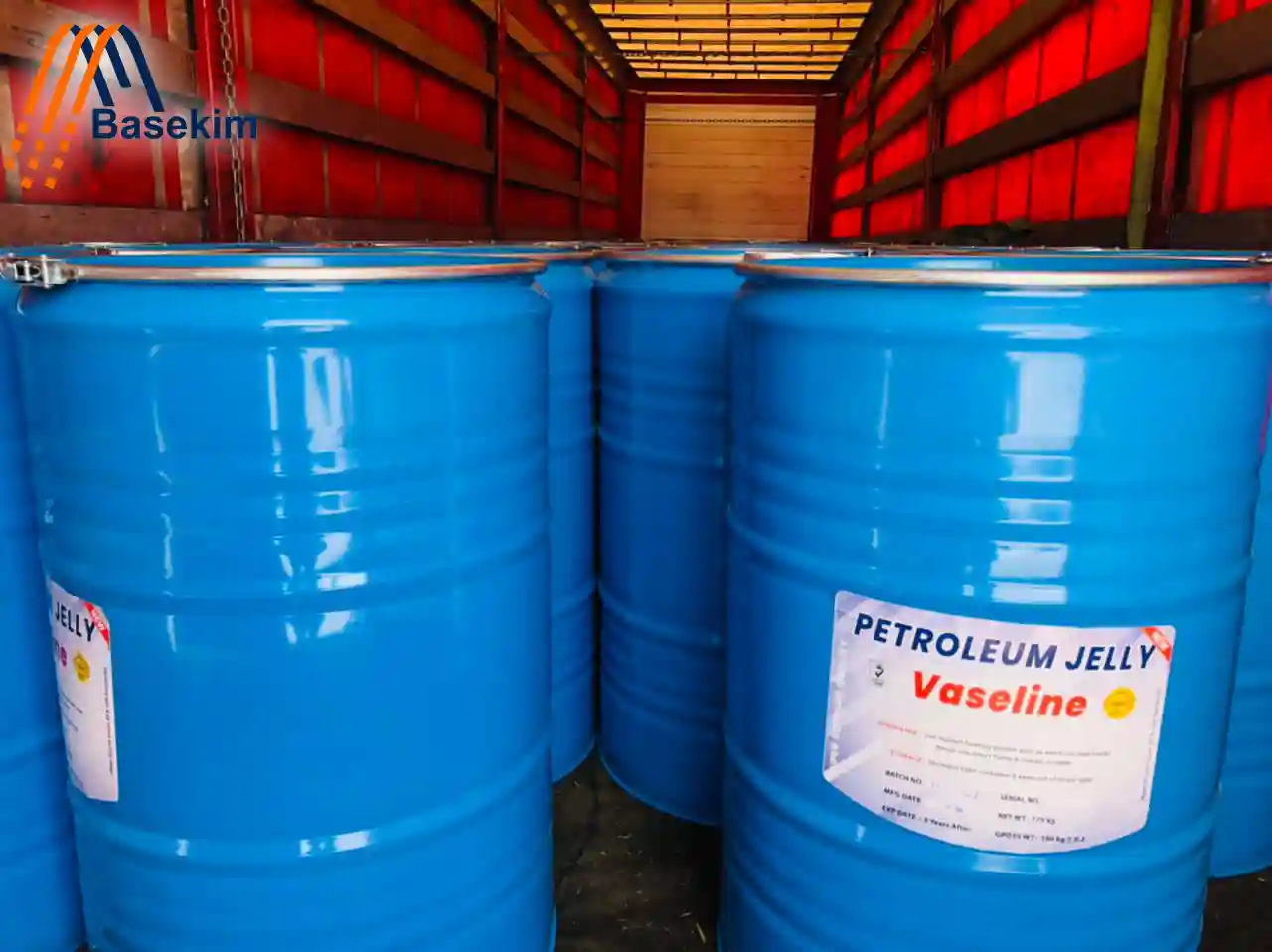
Petroleum jelly, commonly recognized by the leading brand name Vaseline, is a multi-purpose, semi-solid mixture of hydrocarbons that functions as the world’s most effective occlusive skin protectant jelly. By forming a physical barrier on the skin’s surface, pure petroleum jelly seals in existing moisture and shields damaged or irritated tissue from external irritants, significantly accelerating the body’s natural healing process. Whether you are using it as a daily petroleum jelly moisturizer to combat environmental dryness or as a specialized healing jelly for minor abrasions and post-surgical care, it remains the gold standard in Vaseline skincare due to its hypoallergenic, non-comedogenic, and highly stable chemical profile.
For over 150 years, Vaseline original has occupied a permanent spot in medicine cabinets, beauty kits, and industrial warehouses globally. While many consumers use the terms interchangeably, there is a wealth of science and industry knowledge behind the transition from raw materials to the smooth, refined white petroleum jelly found on store shelves.
In this comprehensive exploration, we will dive deep into the science, the diverse petroleum jelly uses, the market factors affecting petroleum jelly price, and the essential role of a high-quality petroleum jelly manufacturer in the global supply chain.
The story of petroleum jelly begins in 1859 in the oil fields of Pennsylvania. Workers noticed a paraffin-like residue forming on oil rigs, which they called “rod wax.” They realized that applying this substance to their cuts and burns helped them heal faster. Robert Chesebrough, a chemist, saw the potential of this substance, refined it into a thin, light-colored gel, and branded it as Vaseline.
Pure petroleum jelly is a blend of mineral oils and waxes. Chemically, it is a mixture of long-chain aliphatic hydrocarbons. Because it is chemically inert, it does not react with the skin or other substances, making it one of the safest topical agents ever discovered.
The quality of the jelly depends entirely on the petroleum jelly manufacturer. Raw petroleum jelly undergoes several stages of filtration and distillation. White petroleum jelly is the most refined form, having been decolorized and purified to remove all impurities, odors, and potential allergens. This high degree of purity is why dermatologists recommend Vaseline skincare even for the most sensitive skin types.
When you buy petroleum jelly, you are investing in a product that performs better than many expensive, complex lotions. Its primary function is occlusion.
Unlike standard lotions that introduce water to the skin, a petroleum jelly moisturizer prevents water from leaving. It can reduce Trans-Epidermal Water Loss (TEWL) by over 98%. This makes Vaseline for dry skin particularly effective during winter months or in arid climates where the air constantly strips moisture from the body.
Medical professionals frequently use healing jelly to treat minor scrapes and burns. By keeping the wound moist, it prevents the formation of hard scabs, which can act as a barrier to new skin cell growth. A moist environment allows skin cells to migrate across the wound more quickly, leading to faster recovery and less scarring.
As a skin protectant jelly, it acts as a literal shield.
Windburn: Applying a thin layer to the face before skiing or hiking protects against cold wind.
Chafing: Athletes use it on areas prone to friction, such as inner thighs or underarms, to prevent painful rashes.
Diaper Rash: It provides a moisture-proof barrier that protects a baby’s sensitive skin from irritation.

The utility of this substance extends far beyond the bathroom vanity. Because of its stability and lubricating properties, it is a staple in various industries.
Manufacturers of cosmetics, pharmaceuticals, and industrial lubricants often need to source their materials in massive quantities. A bulk petroleum jelly supplier provides different grades of the product, from technical grade used in rust prevention to USP (United States Pharmacopeia) grade used in medications.
Lubrication: It is an excellent lubricant for delicate machinery and o-rings.
Rust Prevention: It coats metal parts to prevent oxidation and corrosion.
Leather Conditioning: It can soften and preserve leather goods, from boots to saddles.
Wood Finishes: Some woodworkers use it as a component in finishing waxes.
If you are a manufacturer looking for consistent quality, sourcing from an established company like scurea ensures that your production line receives petroleum jelly that meets stringent international purity standards.
The beauty industry has a long-standing love affair with Vaseline healing jelly. Because it is non-comedogenic (it won’t clog pores), it is surprisingly versatile for facial care.
“Slugging” involves applying a layer of Vaseline original over your entire face as the final step in your nighttime skincare routine. This “slug” layer forces your serums and moisturizers deeper into the skin and prevents them from evaporating overnight. You wake up with a glow that few other products can replicate.
Highlighter: Dab a tiny amount on your cheekbones for a natural, dewy glow.
Eyebrow Gel: A small brush with a bit of jelly keeps brows in place all day.
Lip Scrub: Mix pure petroleum jelly with a bit of sugar to create a gentle, exfoliating lip scrub.
Rubbing petroleum jelly for skin around your cuticles prevents them from drying out and cracking. For hair, a pea-sized amount can tame frizz and seal split ends, though it should be used sparingly to avoid a greasy look.
When you search for vaseline original price, you might notice fluctuations based on several factors.
Grade of Purity: Highly refined white petroleum jelly (USP/BP grade) costs more than yellow or technical-grade versions because of the extensive filtration required.
Packaging and Branding: Vaseline original carries a brand premium due to its guaranteed triple-purification process. Generic brands may be cheaper but must still meet basic safety standards.
Logistics and Volume: Buying in small 50g tubs is significantly more expensive per gram than purchasing from a bulk petroleum jelly supplier.
Global Oil Prices: Since it is a byproduct of the oil refining process, the base petroleum jelly price is often linked to the global crude oil market.
For businesses, the choice of a petroleum jelly manufacturer is a strategic decision. Quality consistency is the most important factor. If the melting point or viscosity of the jelly varies between batches, it can ruin a cosmetic formulation or an industrial batch of lubricant.
A reputable manufacturer will provide a Certificate of Analysis (COA) for every batch. They should adhere to:
USP/BP Standards: Ensuring the product is safe for human consumption or topical use.
Consistency: Maintaining the same color (or lack thereof) and texture across shipments.
Melting Point Control: Crucial for manufacturers making lip balms or ointments that need to stay solid at room temperature.

There are several misconceptions regarding petroleum jelly uses. Let’s clarify the facts.
Yes. Despite its thick texture, the molecules in pure petroleum jelly are too large to enter the pores. It sits on top of the skin. However, if you have very oily or acne-prone skin, it may trap existing oils or bacteria, so it is best used on clean skin.
As a byproduct of the oil industry, petroleum jelly makes use of materials that would otherwise be wasted. Modern manufacturers are also increasingly focused on sustainable refining processes to reduce their carbon footprint.
Vaseline benefits extend to our furry friends. It is often used on dog paws during the winter to protect them from salt and ice, or on a cat’s nose if it becomes dry. Since it is non-toxic, it is generally safe if they lick a small amount, though you should always consult a vet first.
Beyond the skin, this product is a “toolbox in a jar.”
Silence Squeaky Hinges: A small dab on a door hinge works as well as any spray lubricant.
Remove Candle Wax: If wax drips on a table, apply jelly around the edges to help it slide off without scratching the wood.
Prevent Stuck Lids: Rub a little on the threads of glue bottles or nail polish jars to prevent them from drying shut.
Protect Outdoor Lightbulbs: Apply a thin layer to the base of a bulb before screwing it in; this prevents the bulb from rusting into the socket.
When you buy petroleum jelly, you must choose the right grade for your specific needs.
| Feature | White Petroleum Jelly | Yellow Petroleum Jelly |
| Purification Level | Extremely High (Triple-Purified) | Moderate |
| Common Uses | Pharmaceuticals, Cosmetics, Skincare | Industrial Lubricants, Rust Prevention |
| Color | Transparent/White | Light Amber/Yellow |
| Safety | Hypoallergenic, Food/Medical Grade | Industrial Grade |
| Odor | Odorless | Slight Petroleum Scent |
For anyone focusing on Vaseline skincare, the white, highly refined version is the only choice. However, for a mechanic or a factory manager, yellow petroleum jelly offers the same protective benefits at a lower petroleum jelly price.
In an era of high-tech skincare and synthetic chemicals, the simplicity of pure petroleum jelly remains its greatest strength. It is a product that serves the pauper and the prince equally, offering a solution for everything from a child’s scraped knee to the lubrication of massive industrial gears.
Understanding the various petroleum jelly benefits allows you to use this product to its full potential. Whether you are browsing for the best original price for your home or seeking a high-volume petroleum jelly manufacturer for your business, you are participating in a legacy of healing and protection that spans three centuries.
From skincare to industrial rust prevention, this “wonder jelly” proves that sometimes, the simplest solutions are the best. Always ensure you source your product from a reputable bulk petroleum jelly supplier to guarantee that the purity and efficacy of your jelly never waver. Protect your skin, your home, and your business with the unmatched power of petroleum jelly.