

Liquid Paraffin vs Glycerin is an important comparison for manufacturers choosing ingredients for skincare, cosmetics, pharmaceutical formulations, and industrial products. Although both liquids can improve product texture and support moisture management, they work in fundamentally different ways. Liquid paraffin forms a protective, water-resistant layer that helps reduce moisture loss, while glycerin attracts and retains water within a formulation or the outer layers of the skin. Therefore, choosing between them depends on the product’s purpose, water content, desired texture, and performance requirements. Understanding these differences helps manufacturers improve formulation stability, select suitable raw materials, and avoid unnecessary production costs.
What Is the Difference Between Liquid Paraffin and Glycerin?
The main difference between liquid paraffin and glycerin lies in how they interact with water.
Liquid paraffin, also called mineral oil, is a highly refined mixture of petroleum-derived hydrocarbons. It acts primarily as an occlusive ingredient, forming a protective film that reduces water loss from the skin.
Glycerin, also known as glycerol or glycerine, is a water-soluble compound that works as a humectant. It attracts water and helps maintain hydration in products and on the skin.
Consequently, the two ingredients often complement each other rather than compete directly.
Liquid Paraffin vs Glycerin Comparison Table
| Property | Liquid Paraffin | Glycerin |
|---|---|---|
| Chemical composition | Refined hydrocarbons | C₃H₈O₃ |
| CAS number | 8012-95-1 (commonly used) | 56-81-5 |
| Raw material origin | Petroleum | Vegetable, animal, or synthetic sources |
| Water solubility | Insoluble | Completely miscible |
| Main function | Occlusive and emollient | Humectant |
| Moisture management | Reduces water loss | Attracts and retains water |
| Texture | Oily and slippery | Syrupy and potentially sticky |
| Density at 20°C | Typically 0.83–0.91 g/cm³, grade-dependent | Approximately 1.26 g/cm³ |
| Main applications | Cosmetics, pharmaceuticals, lubricants | Cosmetics, food, pharmaceuticals |
| Formulation compatibility | Oil phase | Water phase |
| Main selection factor | Purity and viscosity | Purity and water content |
These are general reference properties. Actual specifications depend on the individual grade, and buyers should verify the supplier’s Technical Data Sheet (TDS).
Liquid Paraffin vs Glycerin for Skin: Which Is Better?
Both ingredients can support skin hydration, but their performance depends on the skin’s condition and the formulation.
Liquid Paraffin for Skin Protection
Liquid paraffin helps form a protective layer over the skin. This layer slows transepidermal water loss (TEWL), making mineral oil useful in products designed for dry or rough skin.
Manufacturers frequently use cosmetic-grade liquid paraffin in:
Moisturizing creams and body lotions
Baby oils and massage products
Protective ointments
Lip care formulations
Skin-conditioning products
In addition, mineral oil provides excellent slip and lubrication. Therefore, formulators can use it to create smooth products that spread easily.
However, liquid paraffin does not attract water in the same way that glycerin does.
Glycerin for Skin Hydration
Glycerin acts differently because its molecular structure allows it to interact with water.
When manufacturers add glycerin to a water-based skincare formulation, the ingredient helps maintain moisture and supports the hydration of the outer skin layers.
As a result, glycerin appears in:
Facial moisturizers
Hydrating serums
Hand creams
Facial cleansers
Shampoos and conditioners
Water-based cosmetic formulations
Nevertheless, high concentrations of glycerin can produce a sticky sensation. Formulators often balance glycerin with other ingredients to improve the final texture.
Which Ingredient Should You Choose?
For products that focus on reducing water loss, liquid paraffin offers a useful solution.
For products that focus on attracting and retaining water, glycerin often provides greater functional value.
However, manufacturers do not always need to choose only one ingredient.
Combining a humectant with an occlusive ingredient can deliver a more balanced moisturizing effect.
Liquid Paraffin vs Glycerin: Understanding Moisture Management
One useful way to compare these ingredients is to examine two separate aspects of moisture management.
The first is water retention within a formulation or skin layer.
Glycerin supports this process through its ability to bind water.
The second is controlling the movement of water away from the skin.
Liquid paraffin addresses this requirement by creating a hydrophobic protective film.
These processes are related, but they are not identical.
For example, a moisturizing cream may contain sufficient water and glycerin yet still require an occlusive component to reduce moisture loss after application.
Likewise, a product rich in liquid paraffin may limit water evaporation without providing the same humectant effect as glycerin.
Therefore, manufacturers should evaluate both water attraction and moisture-loss prevention when designing skincare formulations.
Can You Mix Liquid Paraffin and Glycerin?
Yes. Manufacturers can use liquid paraffin and glycerin in the same cosmetic or pharmaceutical formulation.
However, the two ingredients do not dissolve directly into one another under ordinary formulation conditions.
Glycerin belongs to the water-compatible phase, while liquid paraffin belongs to the oil phase.
Therefore, a stable cream or lotion generally requires a suitable emulsifying system.
How the Combination Works
In a typical oil-in-water moisturizing cream:
Glycerin enters the water phase.
Liquid paraffin enters the oil phase.
An appropriate emulsifier helps distribute the oil droplets throughout the water phase.
Mixing and controlled processing create the desired emulsion structure.
Stability testing verifies the formulation’s performance during storage.
This combination allows manufacturers to develop products that offer both hydration and moisture protection.
However, the final performance also depends on emulsifier selection, ingredient concentration, processing temperature, and the complete formulation.
Liquid Paraffin vs Glycerin in Cosmetic Manufacturing
Cosmetic manufacturers use both ingredients to improve product performance, but each material influences texture and formulation behavior differently.
Texture and Sensory Performance
Liquid paraffin creates an oily, lubricating sensation. Its viscosity grade significantly influences spreading, skin feel, and the perceived richness of a product.
Light mineral oil generally creates a lighter texture, while heavier grades can produce a richer, more substantial feel.
Glycerin adds a different sensory profile. It can increase the perceived moisture of a formula, although excessive concentrations may introduce tackiness.
Therefore, formulators should avoid evaluating these ingredients solely by appearance or viscosity.
Formulation Stability
Liquid paraffin requires proper emulsification in water-based creams.
Without a suitable emulsifier and stable formulation structure, an oil-containing product may separate during storage.
Glycerin mixes directly with water, simplifying its incorporation into many aqueous formulations.
However, glycerin also influences water activity, viscosity, and interactions with other ingredients.
Consequently, stability testing remains essential for both materials.
Compatibility With Other Ingredients
Manufacturers must also consider ingredient compatibility.
Liquid paraffin works well in many oil-based systems and emulsified formulations.
Glycerin performs well in water-based systems, including gels, lotions, and cleansers.
The ingredient’s chemical compatibility often matters more than the commercial name or perceived quality of the raw material.

Liquid Paraffin vs Glycerin in Pharmaceutical Applications
Pharmaceutical manufacturers use these substances for different formulation purposes.
Highly refined liquid paraffin can function as an emollient, protective ingredient, or pharmaceutical vehicle in appropriate preparations.
Glycerin can function as a humectant, solvent, sweetening agent, or excipient, depending on the dosage form.
For example, glycerin helps retain moisture in certain topical preparations, while pharmaceutical-grade mineral oil can contribute lubrication and occlusive protection.
Importantly, manufacturers must select raw materials that meet the appropriate pharmaceutical standards.
A cosmetic or industrial grade does not automatically qualify for pharmaceutical use.
Furthermore, the suitability of either substance for oral, topical, or other pharmaceutical applications depends on the approved grade, formulation, regulatory requirements, and intended route of administration.
Is Liquid Paraffin the Same as Glycerin?
No. Despite their similar appearance, these substances have different chemical structures and physical properties.
Glycerin is a specific chemical compound with the molecular formula C₃H₈O₃.
Liquid paraffin is a mixture of refined saturated hydrocarbons, rather than a single chemical compound.
Their different molecular structures explain why one mixes with water and the other separates from it.
This distinction also affects manufacturing equipment, packaging, quality control, and formulation development.
Therefore, manufacturers should never treat these ingredients as direct chemical equivalents.
Can Glycerin Replace Liquid Paraffin?
Glycerin cannot directly replace liquid paraffin in every formulation.
Although both ingredients contribute to moisturizing performance, their functions differ.
For instance, replacing mineral oil with glycerin in a protective ointment may reduce the formulation’s occlusive properties.
Likewise, replacing glycerin with liquid paraffin in a water-based hydrating serum can create compatibility problems and eliminate the original humectant function.
A successful substitution requires reformulation rather than a simple ingredient exchange.
Manufacturers should evaluate:
Water and oil compatibility
Intended moisturizing mechanism
Texture and spreading behavior
Emulsion stability
Ingredient concentration
Packaging compatibility
Product safety and applicable regulatory requirements
These considerations help reduce formulation failures and unnecessary development expenses.
A New Approach: Selecting Ingredients by Moisture Function Rather Than Product Category
Manufacturers often classify liquid paraffin and glycerin by industry. However, a more useful approach is to classify them according to the specific function a formulation must perform.
This creates a practical decision framework for ingredient selection.
The Four-Question Formulation Framework
| Formulation question | Preferred starting point | Reason |
|---|---|---|
| Does the product need to reduce surface water loss? | Liquid paraffin | Supports occlusive protection |
| Does the product need to bind water? | Glycerin | Provides humectant activity |
| Does the product need both effects? | Consider both | Combines complementary functions |
| Is the product completely water-based? | Glycerin | Simplifies phase compatibility |
This framework provides a starting point, not a guaranteed formulation outcome.
Why This Approach Matters
Consider two moisturizers with identical marketing claims.
The first product contains a high concentration of humectants but limited occlusive ingredients.
The second combines a moderate humectant level with an effective protective oil phase.
Both products may claim to provide moisturizing benefits, yet they can behave differently under changing humidity, application conditions, and consumer usage patterns.
A formulation should therefore be evaluated according to its performance goals rather than relying on ingredient concentration alone.
This is an applied formulation-selection framework, not a claim of newly measured laboratory results.
Liquid Paraffin vs Glycerin: A Practical Testing Method for Manufacturers
A further way to improve ingredient selection is to compare formulations through controlled testing rather than relying exclusively on supplier specifications.
For example, a manufacturer could prepare three experimental moisturizing formulations:
| Trial | Ingredient strategy | Main evaluation objective |
|---|---|---|
| A | Glycerin-focused formula | Evaluate water retention and tackiness |
| B | Liquid-paraffin-focused formula | Evaluate occlusivity and skin feel |
| C | Combined formula | Evaluate balanced hydration and protection |
Each formulation should use an appropriate, stable base system. The manufacturer should keep relevant variables controlled and document unavoidable differences between formulas.
Recommended Evaluation Criteria
1. Moisture performance
Measure hydration and, where appropriate, transepidermal water loss using validated methods.
2. Sensory characteristics
Evaluate spreading, absorption perception, greasiness, and tackiness.
3. Physical stability
Monitor viscosity, phase separation, appearance, and performance under suitable storage conditions.
4. Packaging compatibility
Check whether the formulation interacts with its container, closure, or dispensing system.
5. Cost efficiency
Compare the cost of achieving the required performance, rather than merely comparing the price per kilogram.
This approach can help manufacturers make better purchasing decisions.
Most importantly, it highlights a commercial principle: the lowest raw-material price does not necessarily produce the lowest cost per successful formulation.
Liquid Paraffin vs Glycerin Price: What Affects the Cost?
The price of liquid paraffin and glycerin depends on several commercial and technical factors.
However, comparing their prices directly can be misleading because they perform different functions.
Liquid Paraffin Price Factors
Liquid paraffin pricing commonly depends on:
Refining and purification requirements
Light or heavy viscosity grade
Cosmetic, pharmaceutical, or industrial classification
Order volume
Packaging type
Shipping destination
Market conditions
Glycerin Price Factors
Glycerin pricing commonly depends on:
Vegetable, animal, or synthetic origin
Purity level
Production and refining costs
Food, cosmetic, pharmaceutical, or industrial grade
Packaging and transportation
Regional supply and demand
For bulk buyers, the total delivered cost should include packaging, freight, handling, and any applicable import charges.
Furthermore, manufacturers should confirm whether the quotation includes the required quality documents.
A lower-priced ingredient may create additional costs if it requires further purification or fails a production specification.
How to Choose the Right Grade for Industrial and Cosmetic Applications
The appropriate grade depends on the end product.
For cosmetic manufacturing, suppliers should provide information about purity, physical properties, and relevant regulatory compliance.
For pharmaceutical applications, buyers may require compliance with applicable USP, EP, BP, or other recognized specifications.
Industrial applications can use different technical requirements, depending on the manufacturing process.
Before ordering, buyers should request a Certificate of Analysis (COA), Technical Data Sheet (TDS), and Safety Data Sheet (SDS).
These documents help confirm whether the material meets the intended specifications.
Liquid Paraffin and Glycerin Supplier
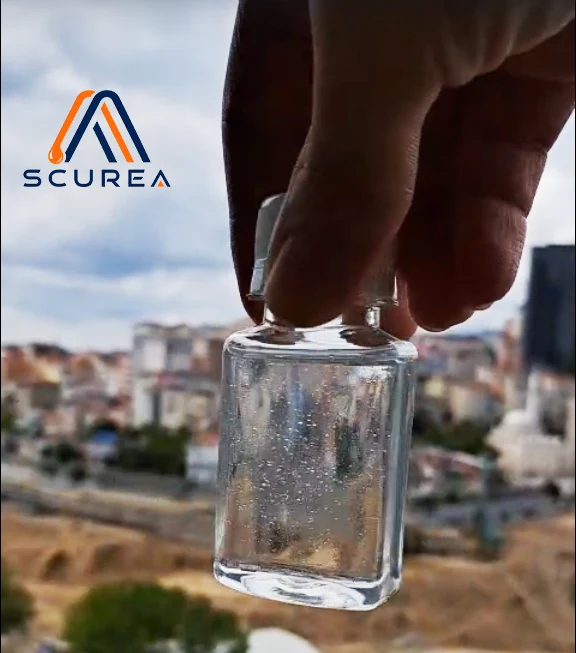
For manufacturers seeking a consistent source of mineral oil products, Scurea supplies liquid paraffin for cosmetic, pharmaceutical, and industrial applications, subject to grade availability and confirmed specifications.
Buyers should communicate the intended application, required viscosity, packaging preference, and quality standard before requesting a quotation.
If a formulation also requires glycerin, its availability and applicable specifications should be confirmed separately.
Selecting ingredients according to their technical function helps manufacturers reduce compatibility problems and improve procurement efficiency.
Frequently Asked Questions About Liquid Paraffin vs Glycerin
1. Which is better for dry skin, liquid paraffin or glycerin?
Both ingredients can benefit dry skin through different mechanisms. Glycerin helps attract and retain water, while liquid paraffin reduces moisture loss by forming a protective film. A well-designed moisturizer may contain both.
2. Can glycerin and liquid paraffin be used together?
Yes. Manufacturers often combine humectants and occlusive ingredients in skincare products. However, glycerin and liquid paraffin require an appropriate formulation system, generally including an emulsifier, to create a stable cream or lotion.
3. Is liquid paraffin another name for glycerin?
No. Liquid paraffin is a refined petroleum-derived hydrocarbon mixture, while glycerin is a water-soluble polyol. They have different chemical properties, applications, and moisturizing mechanisms.
4. Is glycerin better than mineral oil for moisturizing?
Neither ingredient is universally better. Glycerin supports hydration through water binding, while mineral oil helps reduce water loss. The ideal choice depends on the formulation and desired performance.
5. Is liquid paraffin safe for cosmetic products?
Appropriately refined cosmetic-grade liquid paraffin has an established history of use in skincare products. However, manufacturers must verify the grade, purity, and compliance requirements for the intended application.
6. What is the difference between liquid paraffin and vegetable glycerin?
Liquid paraffin comes from refined petroleum hydrocarbons. Vegetable glycerin comes from vegetable-based raw materials and contains glycerol as its main component. Their origin, water compatibility, and functions differ.
7. Can glycerin replace mineral oil in a cream?
Not as a direct one-to-one substitution. Replacing mineral oil with glycerin changes the balance between water-binding and occlusive properties. Manufacturers should reformulate and test the product before approving the change.
8. Which ingredient is more suitable for water-based products?
Glycerin generally suits water-based products because it mixes completely with water. Liquid paraffin requires emulsification or another suitable dispersion system when incorporated into an aqueous formulation.
Conclusion: Liquid Paraffin vs Glycerin – Choosing the Right Ingredient
The comparison of Liquid Paraffin vs Glycerin reveals an important lesson for cosmetic, pharmaceutical, and industrial manufacturers: ingredients that appear similar can perform entirely different functions. Glycerin helps manage water through its humectant properties, while liquid paraffin protects surfaces and reduces moisture loss through its occlusive behavior. Neither ingredient offers a universal replacement for the other, and both can deliver valuable benefits when formulators use them correctly.
For better results, manufacturers should move beyond simple comparisons of purity, price, or viscosity. Instead, they should assess water compatibility, moisture-management requirements, sensory performance, formulation stability, and total production cost. This approach helps transform raw-material selection from a purchasing decision into a measurable formulation advantage. Ultimately, the best ingredient is not necessarily the one with the broadest range of applications, but the one that performs the required function consistently, safely, and efficiently