

Wax for Hot Melt Adhesives plays a critical role in the short window available for packaging bonds to form: the adhesive must flow through the equipment, wet the surface, and develop sufficient strength before the package moves forward. Choosing the right wax helps manufacturers control this process. However, a successful purchase requires more than a suitable melting point or an attractive price per tonne. Buyers need a grade that works with their adhesive formulation, matches production conditions, and delivers consistent results across repeat orders.
Why Wax Matters in Hot Melt Adhesive Formulations
Wax helps formulators adjust the behavior of many conventional hot melt adhesives during application and cooling. Its contribution extends beyond reducing raw material cost.
Within a suitable formulation, wax can influence:
Melt viscosity and flow.
Substrate wetting.
Open time and setting behavior.
Hardness and flexibility after cooling.
Elevated-temperature bond performance.
These properties interact. A change that improves application flow may also alter how quickly the adhesive solidifies. Paramelt identifies viscosity, wetting, setting rate, and heat resistance among the characteristics that the wax component influences in packaging hot melts.
Manufacturers should therefore evaluate the complete adhesive rather than approve a wax from its datasheet alone.
Open Time and Set Time: What Buyers Should Understand
Open time describes the interval after application during which the adhesive can still form a satisfactory bond when the surfaces meet.
Set time describes how quickly the assembled bond develops enough strength under defined conditions.
A carton-sealing line needs sufficient open time for flap closure and a short enough set time to hold the carton securely when compression ends. Improving one measurement without checking the other can create production problems.
Paraffin Wax for Hot Melt Adhesives
Paraffin wax for hot melt adhesives offers an established option for packaging formulations. Suitable grades help manufacturers adjust flow while meeting application-specific requirements for color, odor, and cooled-bond performance.
Cold-service packaging provides a useful example. ExxonMobil reports that selected fully refined paraffin waxes support fiber tear at refrigerator and freezer temperatures in its tested adhesive applications. Buyers should treat this as grade-specific evidence and verify performance in their own formulations.
When evaluating paraffin wax, request:
Melting characteristics and test method.
Oil content.
Penetration or hardness data.
Color and odor information.
Batch acceptance limits.
Documentation relevant to the intended application.
Two paraffin grades with similar melting points may still behave differently. Compare them in the same adhesive and on the actual packaging substrate before approving a substitution.
Wax for EVA Hot Melt Adhesives
Selecting wax for EVA hot melt adhesives requires attention to the entire formulation. The EVA grade, tackifier, wax, and stabilizer package must work together.
Different grades of EVA resin vary in vinyl acetate content and flow characteristics, which formulators should consider when selecting a compatible wax.
A controlled screening trial provides a clear starting point:
Keep the EVA, tackifier, and stabilizer package constant.
Compare candidate waxes at the same initial loading.
Measure adhesive viscosity at the intended application temperature.
Test open time and set time under consistent conditions.
Evaluate bonds after conditioning at the required service temperatures.
This procedure helps formulators identify the wax’s contribution before they make further adjustments.
Avoid approving a candidate solely because it produces a strong bond immediately after preparation. Production equipment may hold adhesive at temperature for much longer, and packaging may face different conditions during storage and transport.
Microcrystalline Wax for Hot Melt Adhesives
Microcrystalline wax for hot melt adhesives gives formulators additional options when they need to adjust hardness and flexibility.
The exact grade matters. Paramelt distinguishes a flexible, lower-melting microcrystalline wax from a relatively hard, higher-melting grade and identifies hot melt adhesives among their applications.
Instead of requesting a generic microcrystalline wax, describe the formulation problem to the supplier. For example:
Does the cooled adhesive crack during bending?
Does the application require a harder wax component?
Does the bond lose performance after cold conditioning?
Does the current blend solidify outside the required assembly window?
These details help suppliers recommend relevant samples. Trials must then establish whether the proposed grade improves the finished adhesive.
Fischer Tropsch Wax for Hot Melt Adhesives
Fischer Tropsch wax for hot melt adhesives offers options that combine high melting characteristics with low melt viscosity.
Sasol’s technical literature describes how its FT hard waxes can adjust rheology and use crystallinity to control open and set times in suitable adhesive formulations.
This makes FT wax worth evaluating when manufacturers need to refine application flow and solidification behavior. However, faster setting only helps when the equipment brings the surfaces together within the available bonding window.
A realistic trial should reproduce the delay between adhesive application and substrate contact. Immediate laboratory closure can conceal a problem that appears on a slower or less consistent production line.
Low Viscosity Wax for Hot Melt Adhesives
Low viscosity wax for hot melt adhesives can support formulation development, but buyers need a defined measurement basis.
A viscosity value without a test temperature provides little purchasing guidance. If one supplier reports a value at 140°C and another reports a value at 160°C, buyers cannot compare the numbers directly.
Request:
| Measurement detail | Why it matters |
|---|---|
| Test temperature | Viscosity changes with temperature |
| Test method | Different procedures may produce different results |
| Instrument settings | Consistent settings support meaningful comparisons |
| Typical value or specification limit | Buyers need to know what the supplier guarantees |
| Wax or finished-adhesive measurement | Ingredient viscosity does not establish blend viscosity |
Evaluate the finished adhesive at the intended operating temperature. A low-viscosity wax does not automatically produce the required application behavior in every polymer–tackifier blend.
High Melting Point Wax for Hot Melt Adhesives
High melting point wax for hot melt adhesives may help formulators adjust solidification and elevated-temperature performance. However, the wax’s melting point does not define the finished adhesive’s service-temperature limit.
The polymer, tackifier, ingredient proportions, substrate, and applied load also influence bond performance.
Buyers should distinguish between thermal measurements. Melting point, congealing point, drop point, and ring-and-ball softening point describe different test outcomes. Similar numbers from different methods do not prove that two grades offer equivalent performance.
Pair ingredient data with a finished-bond test under the expected temperature and load.
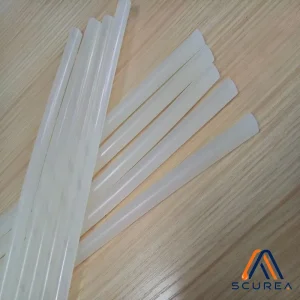
Wax for Packaging Hot Melt Adhesives
Selecting wax for packaging hot melt adhesives starts with the production process and the package’s destination.
High-Speed Carton Sealing
The adhesive must wet the board and develop holding strength within the line’s timing limits. Test the shortest and longest closure delays that normal production creates.
Refrigerated and Frozen Packaging
Condition assembled packages at the intended service temperature before assessing bond performance. Room-temperature results alone cannot establish suitability for cold storage.
Coated and Variable Board
Use representative production materials during trials. A result on one uncoated board does not demonstrate performance on printed, coated, or variable recycled surfaces.
For food-related packaging, request documentation for the exact wax grade and intended use. Assess the complete adhesive and packaging construction against the applicable requirements.
How to Evaluate a Wax for Hot Melt Adhesives Supplier
A reliable wax for hot melt adhesives supplier should clearly identify the proposed grade and support repeat orders with consistent documentation.
Request the following before approving regular supply:
| Document or information | Purchasing purpose |
|---|---|
| Technical data sheet | Describes the grade and typical properties |
| Agreed specification | Defines acceptance limits |
| Batch certificate of analysis | Reports results for the supplied lot |
| Safety data sheet | Supports handling procedures |
| Manufacturer and origin details | Supports traceability |
| Sample identification | Connects trial results to the proposed supply |
| Packaging and net weight | Supports receiving and production planning |
| Lead time and supply capacity | Supports inventory decisions |
Ask how the supplier handles changes in origin, manufacturing source, or specification. A qualified sample should represent the material that future deliveries will contain.
Wax for Hot Melt Adhesives Price: Compare Production Cost
Wax for hot melt adhesives price depends on grade, specification, order volume, origin, packaging, freight, and commercial terms.
Compare quotations on the same basis. Confirm the currency, net weight, delivery term, destination, and quotation validity.
Then assess how the candidate affects operating cost. A lower ingredient price may lose its advantage if the formulation requires more adhesive per package or creates additional rejects.
The following hypothetical example illustrates the calculation:
Frequently Asked Questions
What to Specify When Buying Bulk Wax for Hot Melt Adhesives?
A detailed enquiry helps suppliers recommend suitable grades and provide comparable offers.
For bulk wax for hot melt adhesives, include:
Adhesive system and end use.
Substrate type.
Application temperature.
Target viscosity and measurement temperature.
Required open time and set time.
Storage and transport conditions.
Required technical and application documentation.
Trial quantity and expected recurring volume.
Preferred packaging and physical form.
Destination port and requested Incoterm.
Before committing to regular bulk orders, qualify a representative sample and agree on acceptance limits. Where practical, evaluate a second production lot to check repeatability.
What Is the Best Wax for Hot Melt Adhesives?
The best wax for hot melt adhesives meets the application’s processing, bonding, documentation, and cost requirements consistently.
Paraffin, microcrystalline, and Fischer Tropsch waxes offer different grade options. Select candidates according to the problem you need to solve, then compare them through controlled formulation tests and a realistic production trial.
What does wax do in hot melt adhesives?
Wax helps control melt viscosity, flow, open time, and setting behavior. Its effect depends on the wax grade and its interaction with the polymer and tackifier.
Can I replace one wax grade with another without changing the formulation?
Do not assume that two grades offer equivalent performance because they share a similar melting point. Test viscosity, compatibility, open time, set time, and conditioned bond strength before approving a replacement.
Does a higher wax melting point improve adhesive heat resistance?
A higher melting point alone does not guarantee better heat resistance. The complete formulation and the load on the bond determine performance. Test the finished adhesive under the intended service conditions.
What information should I provide when requesting a bulk quotation?
Provide the adhesive system, substrate, application temperature, target performance, order quantity, packaging preference, and destination. Request a technical data sheet, representative sample, agreed specification, and batch certificate of analysis.
Conclusion
Choosing wax for hot melt adhesives means matching a material to a production process. Start with the required bonding window, substrate, and service conditions, then qualify candidate grades through controlled tests and a realistic line trial. Compare suppliers on consistent specifications and total operating cost.